

Adressen afgør om dit barn får huller i tænderne


 Del med venner
De færreste forældre tænker på, at deres bopælsadresse kan have betydning for, om deres børn får huller i tænderne eller ej. En ny dansk undersøgelse viser, at der er en markant sammenhæng mellem børns og unges bopæl og risikoen for caries (huller i tænderne), skriver Tandlægebladet.
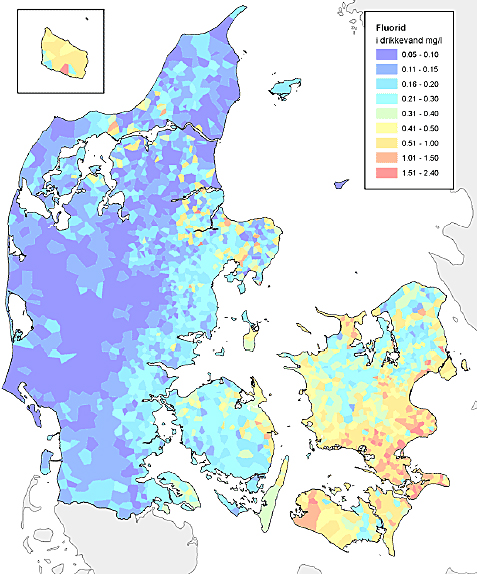
Fluorkoncentrationen i det postevand, der kommer ud af vandhanerne i hjemmet, kan have en afgørende betydning for deres børns cariesrisiko. Børn, der bor i Vestjylland, har dobbelt så stor risiko for at få huller i tænderne som børn, der bor i den sydøstlige del af Sjælland samt på Lolland-Falster, Møn og Bornholm, hvor fluorkoncentrationen er højest.
Der er stor forskel på fluorkoncentrationen i drikkevandet alt afhængig af, hvor man befinder sig i landet. Bor man som barn eller ung i et område, hvor der en høj koncentration af fluor i drikkevandet, kan det betyde, at risikoen for at få huller i tænderne kan være halvt så stor som i et område, hvor fluorindholdet er lavt – eksempelvis i Vestjylland hvor risikoen for at få huller i tænderne er op til dobbelt så stor som de områder, hvor fluorkoncentrationen er højst. Jo mere fluor i vandet, jo færre huller.
Undersøgelsen er foretaget blandt 48.351 børn i 5-års-alderen og 43.848 15-årige i hele landet.
Her kan du se, hvad fluorindholdet i drikkevandet er i dit område. Klik på billedet for at se større billede.
Læs mere i Tandlægebladet nr. 6 2010 eller på www.tandlaegebladet.dk




Det kan også skyldes andre mineraler. I Vestjyllannd er vandet meget blødt og indeholder væsentlig mindre kalk, magnesium og andre mineraler, der kan have betydning for tandsundheden. Naturligt forekommende fluor findes i form af calciumfluorid, der er ret stabilt, og derfor ikke så sundhedsskadelig. Fluor i tandpasta er som oftest i form af natriumfluorid, der er et giftigt affaldsstof fra bl.a. metalindustrien. Natriumfluorid er skadeligt for hjernen og for knoglerne. Nazisterne brugte det i koncentrationslejrene til at gøre fangerne mere medgørlige. Adskillige eksperter mener også at det er skadeligt for tænderne, bl.a. Henrik Lichtenberg: http://www.lichtenberg.dk/anvendelsen_af_fluor_i_tandpleje.htm
Sikke noget vrøvl! Fluor er meget giftigt, og er aldrig bevist kunne forbygge noget som helst, andet end din sundhed selvfølgelig. Tvært imod får folk jo dårlige tænder af alt det fluor. Efter jeg stoppede med fluorholdige tandpastaer har jeg aldrig haft ømme tandhalse siden.