Scandefa 2011, Scandinavian Dental Fair
5. march 2011
Filed in Events
SCANDEFA (Scandinavian Dental Fair) is the annual scandinavian trade fair for tandlægeteamet and dentalbranchen. The fair connects new knowledge about products, research and clothing, and has more than 10,000 visitors from Scandinavia and other countries, as well as over 150 exhibitors.
In parallel with the fair SCANDEFA, arranged by Bella Center, is held year course, organized by the Tandlægeforeningen (www.tandlaegeforeningen.dk).
PARTICIPANTS
SCANDEFA 2011 is a trade fair for dentists, dental assistants, dental technicians, dental hygienists and professionals.
REGISTRATION
There is a approach to online registration 1 month before the opening of SCANDEFA 2011.
BESØGERREGISTRERING TO SCANDEFA 2011 IS NOW OPEN!
Opening HOURS
7.-9. april 2011
Thursday 7. april 10.00-18.00
Friday, 8. april 09.00-18.00
Saturday 9. april 09.00-15.00
See video from the fair
CONTACT
Christian Olrik, col@bellacenter.dk
Bella Center, direct tel. 32 47 21 25
On Scandefa
SCANDEFA is held for the first time in 1968 at the Bella Center at Bellahøj in Copenhagen, denmark as a part of the Tandlægeforeningens Kursusnævns largest annual vocational training course for the members. In 1976 moved to the messe, and of course to the Bella Center at the same address on Amager.
Tandlægeforeningens Courses
Tandlægeforeningen started the course in 1934, on fol.a. Mercur Hotel in Copenhagen with a very small udstillingsdel, and the event is moved, as mentioned above, the Bella Center in 1968. And 1982 was the event always the beginning of January and was Januarkursus – from 1983, moved the event to march under the name of year course.
How expensive is a visit to the dentist really?
13. October 2010
Filed in News
What is the cost of a regular examination at the dentist? This is a question many have difficulty to answer, shows a study by Epinion made for Tandlægeforeningen among 1.003 danes.
Many young people do not, that a regular study only costs 83 kr., when one is 18-25 years old, while adults over the age of 25 will pay 142 kr. A teeth cleaning costs 178 kr.
Among the participants in the study had each seventh not been to the dentist in the last two years. Of this group believed 47 per cent., to a regular dental examination costing more than dkk 300. Actually believed almost every fourth, that the price had to be over 400 kr.
Myths and guesswork
– It shows that the perception that it is expensive to go to the dentist, often based on guesswork rather than facts, especially among those who opt out of the dentist. There seems to have been built up a myth about tandlægernes rates, as they do not go regularly to the dentist, has been caught up in, says Susanne Andersen.

Susanne Andersen, President of the Tandlægeforeningen
The lack of knowledge for the price of a regular dentist, however 36 per cent. of those who have been to the dentist within the last two years.
– In Tandlægeforeningen we find it positive that a dental examination is significantly cheaper than many expect. But only if it helps to make the experience at the dentist even better. For if the erroneous perception of the price to get someone to keep away from the dentist, it is extremely unfortunate. The regular inspections have a deterrent effect and can help to detect any problems early, so that the individual can prevent both major dental procedures and great tandlægeregninger, says Tandlægeforeningens president, Susanne Andersen.
It is a problem that many young people are dropping the regular visits to the dentist, and it makes Tandlægeforeningen now something about the campaign tandfix.dkthat is targeted at young people of 18-25 years. The campaign must tell the young that it can have a big impact to drop the dentist visit, and that it is actually better to go regularly to the dentist than to let be.
Tandfix.dk – campaign for young people
6. October 2010
Filed in News
Tandlægeforeningen is behind a new and different online campaign aimed at young people. Tandfix.dk called the portal with a sense of humor and irony to capture the interest of young people for their own dental health.
Too many young people are dropping the regular visits to the dentist. It will Tandlægeforeningen now do something with a campaign that is targeted at young people of 18-25 years. The campaign must tell the young that it can have a big impact to drop the dentist visit, and that it is actually better to go regularly to the dentist than to let be.
Tandfix.dk
The campaign, which starts on 23. august, is mainly online, and takes its point of departure in the site TandFix.dk, where young people can go into a universe that is created on the humor and irony. But the young people will also encounter the campaign on Facebook. The only thing they will not encounter, is moralized.
– Our desire is to engage in a dialogue with the young people and based on their life situation without talking down to them.

The tooth fairy there with a sense of humor to reach out to young people
We know that many young people think that the regular visits to the dentist is not so necessary, because they do not have any problems with their teeth and gums, right here and now. But as much as shows the effects often only later in life, says Tandlægeforeningens president, Susanne Andersen.
It is important to get things in the bud when it is about the diseases of the teeth and mouth. If you wait, you run the risk of both toothache and comprehensive treatment.
It is also inexpensive to get a check-up at the dentist.
– Many young people do not know, that a regular study actually only costs 83 kr., when one is 18-25 years, while a cleaning costs 178 kr. It may not pay to wait, " says Susanne Andersen.
In connection with the start of the campaign will dental students in Copenhagen and Aarhus, denmark take off at technical schools and social and health care educational institutions and to enter into dialogue with young people on their tandplejevaner. At the same time, there will be hung campaign posters up, and there will be a shared bags out with water, flyers, toothbrush and toothpaste.
The campaign has been, with support from the Danish Regions and is developed in cooperation with the communication agency NetPeople.
Visit Tandfix.dk
Visit Tandfix.dk on Facebook
Give your teeth a longer life
6. October 2010
Filed in News
A new study shows that people who skip the regular visits to the dentist over, has far greater risk of losing some of their teeth, when they come up in the 50-years-of age and over. Even if the teeth look nice and fine out here and now, is it not a good idea to just skip tandlægebesøgene over. If you as the young fail to go regularly to the dentist, the consequences can prove only later in life, shows the survey, which is carried out in relation to the great STUFF-review (Diet, Smoking, Alcohol and Exercise).
The results from the survey shows that the 50-64-year-olds who have been to the dentist regularly, have retained significantly more teeth than those who have missed the visits over. Among those who go regularly to the dentist has 9 out of the 10 retained most of their teeth when they are over 50 years old, while 20% of those who do not go regularly to the dentist only retains 20 or fewer teeth, when they are over 50 years.
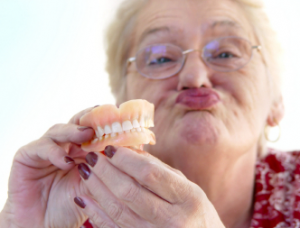
Give your lights a longer life - regularly go to the dentist
The consequences of having few teeth in the mouth are bl.a.:
- Reduced tyggeevne
- Læspen
- Problems with convergence in the lower third of the face, allowing you to look significantly older than you are.
- Extra wear on the remaining teeth. The fewer teeth you have left, the more work there is for the remaining teeth.
- It doesn't look nice
Children and adolescents have healthier teeth
29. september 2010
Filed in News
The efforts of the children and ungdomstandplejen are now bearing fruit, and new figures from the Danish Health and medicines authority shows that the tandsundheden getting better and better for the country's children and young people. The new figures show that around three out of ten 18-year-old never felt the dentist's drill in a tooth. In 1990 it was one out of every ten 18-year-old who had never had the holes in the teeth that required treatment with boron.
Among the 18-year-old, who has been treated holes in the teeth, most people only put fillings in up to four tooth surfaces. Also we are talking here about a significant improvement in comparison to 1990.
For the 15-year-old is it possible to follow the development all the way back to 1980/81. At that time they had a 15-year-olds in the average fillings in 13,2 tooth surfaces. The new figures from the Danish Health and medicines authority shows that the equivalent figure measured in 2009 is 2,33.
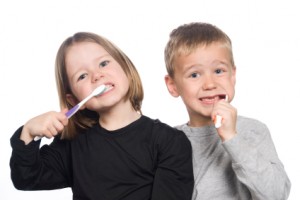
Three out of ten children have never been drilled in his teeth
Measured on the regions is tandsundheden among children and young people in the Capital Region followed by the Region of Zealand and Region Midtjylland. The north denmark Region and Region southern denmark are respectively fourth and fifth place.
Tandlægeforeningens president Susanne Andersen welcomes the positive development, but warns at the same time to downgrade the efforts of the children and ungdomstandplejen.
– I have no doubt that the major prevention effort in the development of children and ungdomstandplejen have contributed to the fact that children and young people have such healthy teeth in a day. But even if the average figures are good, there are unfortunately still children, who have many gaps in the teeth. And then we got new tandsundhedsproblem, namely, acid injuries of the tooth enamel as a result of the ever greater consumption of cola and other soft drinks, says Susanne Andersen.
According to tandlægernes president has some children use to get to the dentist very often, while children with healthy teeth and gums, by their dentist, are assessed to have a check-up with 1-2 year intervals.
Efforts are now much more targeted and customized than back when you called all of every sixth month, says Susanne Andersen.
Cheating with gold in dental crowns
1. september 2010
Filed in News
The company Oversea Labs, over 900 Danish dentists use, and many have used for decades, have been unveiled in to dabble with, among other things guldindholdet in the crowns. It is DR news 21 Sunday – with the help of a dentist who could detect the alleged fraud.
Cheap dental crowns from China
The crowns from Oversea Labs are primarily manufactured in China, where wages are significantly lower than for example in Denmark. And it is one of the main explanations on the company's great success.
This will now overtandlæge Ulla Pallesen from Dentistry at the University of Copenhagen to address a sharp criticism against the company's methods.
“I might understand a little better why these crowns can be sold so cheaply. If you cheat with the gold, you can surely sell it cheaper. It, that there is so much less gold in it, I regard as a very serious matter,” says overtandlæge Ulla Pallesen.
However, it is not only the Oversea Labs that get manufactured dental crowns and other tanderstatninger in China. It is a business model used by several other Danish suppliers of crowns, bridges and other tanderstatninger.
Traces of Nickel and Lead in tandkronerne
One is that there may have been scammed with the content of gold in the tandkronerne, but in the survey as 21 Sunday got made, via the independent laboratory Force Technology, were also found the remains of both nickel and lead in the crowns, substances which ought to be found in the crowns. This has led to the Danish medicines agency will now examine whether tandkronerne pose a health risk to patients.
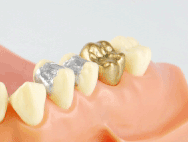
Overtandlæge concerned about the metals used for dental crowns
“We are concerned that the crowns, in addition to be cheaply made, also can harm people. If we find out that they are doing it, we take contact to the dentists who have purchased crowns and gave them to the patients”, says Christian Howard-Jessen.
Also overtandlæge Ulla Pallesen at University of Copenhagen expresses concern over what else is put in the tandkronerne.
“Then I would be concerned about whether they live up to the other contracts on the nasty metals that could also be therein”, says Ulla Pallesen to 21 Sunday.
The police on the way
Oversea Labs, also known as PTL, may with great probability expect a police report from the Danish medicines agency. Is that cheated with the amount of gold in the teeth, then there is the talk of scams, and it will undeniably end up with a police report.
“Now we shall hear what the company says in the interview, but my assessment is that the grant was so comprehensive, that we will proceed with the case”, says Christian Howard-Jessen, head of communications in the Danish medicines agency.
According to the Oversea Labs having the crowns contain 75 percent gold, but 21 on Sunday, has revealed that gold percentage may be as low as 27 percent. None of the 5 tested dental crowns lived up to the stated 75 percent.
“That was from 27 to 54 percent gold in the teeth, so it must say, is a significant deviation from the specification,” says head of department at Force Technology, Ole Bundgaard.
Oversea Labs
The company Oversea Labs is a giant on the Danish market for dental crowns, and supplies annually approx. The 5,000 crowns to dentists in Denmark, in addition to that there is also an export market on the tanderstatningerne from the company for both Greenland, the Faroe islands and other countries.
Broadcast from 21 on Sunday the 30. august 2010 can be seen here:
http://www.dr.dk/DR1/soendag/Udsendelser/2010/0830104333.htm
Correlation between craving for sweets and alcoholism
4. august 2010
Filed in News
In the following a new u.s. study, there may very well be the link between alcoholism in a child's family, and the child's own perception of depression, and the baby's cravings for sweets and other sweets. It shows just published research in the journal Addiction.
The american researchers examined the sweetness of the preference in children with genetic predisposition for alcoholism, and came to alcohol and the sweet taste manages to activate many of the same “belønningskredsløb” in the brain. The study also included children with depressive symptoms, to see if they had the same “belønningskredsløb” with sweets.
In the study attended 300 children between 5 and 12 years and their mothers. The children were allowed to taste five concentrations of sucrose (sugar) in water, while the researchers, from a questionnaire, rated the children's evs. depressive states. It was also noted the concentration of sukkervand individual children like best. Mothers ' participation in the study was to answer the questions about alcoholism in the family.
The most intense sweetness, of the five different variants sukkervand, consisted of 24 % sucrose, which corresponds to approx. 14 teaspoon. sugar in a cup of water. The result showed that out of the 300 children who participated in the survey, there were 37 children that seemed best on the most intense sweetness. It turned out that these 37 children had both alcoholism in the family and their own symptoms of depression. The intensity of the cutest mix was one-third sweeter than the other children in the study preferred.
The researchers uderstreger, however, that a preference for sweet as a child does not necessarily mean an increased risk of alcoholism later in life, writes Tandlægebladet.
Mennella JA, Pepino MY, Lehmann-Castor SM, Yourshaw LM. Sweet preferences and analgesia during childhood: Effects of family history of alcoholism and depression. Addiction 2010; 105: 666-75.
”Sweet” cultural background affects children cariesrisiko
10. april 2010
Filed in News
If the mother and father have a short education or non-western background, the risk of caries in children is significantly larger than that of the average. It shows a new Norwegian study, published in Community Dentistry and Oral Epidemiology.
In the survey received 523 children made tandundersøgelse, while the parents responding to questions about the socio-economic conditions and on own tandplejevaner. In the group of parents with non-western background and education had the children, respectively, nine and twelve times more at risk for incipient caries in the enamel and tandbenet. This is due to excessive sugar intake, and lacked regular brushing.
Non-western background and education
“In the group of parents with non-western background and education had the children, respectively, nine and 12 times as likely to have incipient caries in enamel and in dentin. However, the confidence intervals for these probabilities was quite large, ie. uncertain and one should also notice that it is about 24 children out of a total of 523”, says Dorthe Holst, professor of samfundsodontologi at Oslo University, and adds:
"There is much to indicate that there is a "sweet", and not too systematic tandbørstekultur behind the numbers. Småbørnskulturen in part non-western families is different than it, which gradually came to characterize most of the nordic. We also find high cariesaktivitet among Norwegian children, but it is rather a windows - than a kulturudfordring. Fortunately, studies of the same issue, among 14-16-year-old children and young people in Oslo, have shown that the differences are blurred. A good and respectful communication with current families at risk should be able to give good results”.
Read more in Tandlægebladet no. 4 2010 or on the www.tandlaegebladet.dk
Better oral hygiene can save respiratorpatienters life
10. april 2010
Filed in News
One of the most frequent complications in patients in hospital intensive care units are pneumonia. Lungeinfektion in connection with respiratory therapy affects not only older people, but weakened patients of all ages. In a large american study, recently published in the American Journal of Critical Care, researchers examined the effect of performing extended oral hygiene with a bl.a. suction, cleaning and brushing two times a day on respiratory therapy.
In many cases, it is in fact bacteria from the oral cavity which are the cause of the complications and thorough oral hygiene can according to the study, reduce the risk of lungebetændelsen and the resulting costs, writes Tandlægebladet.
Read more in Tandlægebladet no. 4 2010 or on the www.tandlaegebladet.dk
Dentists want greater fee for no-shows
10. april 2010
Filed in News
Some of the dentist's rates are established in the so-called tandlægeoverenskomster, to be concluded between the Tandlægeforeningen and the Danish Regions. As the negotiations between Tandlægeforeningen and Danish Regions began in February 2010, it was bl.a. with a desire from the Tandlægeforeningens page to discuss a higher udeblivelseshonorar at the agreed major treatments.
Today is the fee for no-show set for 229 kr., regardless of the scope of the agreed treatment. It considers Tandlægeforeningens negotiator, Bear Haulrig, is not reasonable.
“Udeblivelseshonoraret is perhaps reasonable in relation to the fees charged for a study, but it stands in stark contrast to the cost of a lack of earnings, if h occurs in the context of a larger planned treatment such as a root canal or a larger pa-treatment,” says Bjørn Haulrig to Tandlægebladet and continues:
“Even worse, it seems, if there is planned a large operation, where there is reserved yet more time. In addition to this, the ambience sterile is wasted – a spot, that is both time-consuming and costly,” emphasizes Bear Haulrig.
How much the maximum cost for the patients by the absence of major planned treatments have Tandlægeforeningen not yet settled on, since the scheme could also be combined in other ways, than the current model, e.g. to be dependent on the reserved time.
Although the collective bargaining with Tandlægeforeningen and Danish Regions started in February, negotiations will in all probability continue for the rest of the year. And by then, there will certainly be no change in the fee for no-show on the agreed treatments.
Read more in Tandlægebladet no. 3 2010 or on the www.tandlaegebladet.dk
Lower sugar levies provide lower teeth
25. march 2010
Filed in News
It is a bomb, in particular the children's and young people's dental health, sugar levies has fallen every year since 2001. It says Tandlægeforeningens president Susanne Andersen in a comment to the new information from the ministry of finance.
– We can see that the portions have become larger over the last ten years, and it is hardly unlikely that it has anything to do with the gradual tax reductions. Slikposerne have been greater, and the same is sodavandsflaskerne. While the biggest soda bottles for ten years ago called the 1½ litre, we are now up to 2 litres. And it is a big problem for the teeth. The large bottles of deadlines, especially children and young people to have a soda standing and taking a sip of it periodically. In this way, the teeth in a constant acid bath in, and the acid in the soda can in the worst case corrode the tooth enamel away, " says Susanne Andersen.
Studies have shown that every 7. teen, to a greater or lesser extent, have acid injuries of the tooth enamel.
In addition to syreskaderne is the sugar in soft drinks and sweets are one of the major culprits when it comes to holes in the teeth. The trend has for many years been, that the danes have fewer and fewer holes in the teeth, but Susanne Andersen is afraid that the positive development will stop, if the intake of sugar continues to increase.
Further information may be obtained from Tandlægeforeningen by contacting the communications officer May Falcon 70 25 77 11 or head of communications Claus Jørgensen on 70 25 77 11 or 21 26 56 98.
The elderly do not know to hjemmetandpleje scheme
18. december 2009
Filed in News
Hjemmetandplejen is on offer to older people and difficult people with limited mobility, who find it difficult even to give dentistry a visit. However, several hundred elderly in the municipality of Aalborg, miss out on the offer of dental care in the home, because they do not know to the scheme, writes tv2/nord.
Equipped with a small tandlægekuffert can dentist resolve most tasks in the home, which protects the elderly and severely disabled patients for a troublesome trip out of the home. But according to Aalborg Municipality's dentistry, there are a few that make use of the possibility to get the dentist to give your teeth a check out in their own home.
“We suspect that we could have almost twice as many users in the system, if any, as is justified, took the offer,” says dentist Birgit Krabsen from dental care in Aalborg municipality.
Care centers can also avail of the scheme, so that staff at the plejecentrene can concentrate on providing care and support, instead of having to set aside time to accompany the residents one by one to the dentist.
Scandefa 2010, Scandinavian Dental Fair
27. november 2009
Filed in Events
SCANDEFA (Scandinavian Dental Fair) is the annual scandinavian trade fair for tandlægeteamet and dentalbranchen. The fair connects new knowledge about products, research and clothing, and has more than 10,000 visitors from Scandinavia and other countries, as well as over 150 exhibitors.
In parallel with the fair SCANDEFA, arranged by Bella Center, is held year course, organized by the Tandlægeforeningen (www.tandlaegeforeningen.dk).
PARTICIPANTS
SCANDEFA 2010 is a trade fair for dentists, dental assistants, dental technicians, dental hygienists and professionals.
REGISTRATION
There is a approach to online registration 1 month before the opening of the SCANDEFA 2010.
Opening HOURS
15.-17. april 2010
Thursday 15. april 10.00-18.00
Friday 16. april 09.00-18.00
Saturday 17. april 09.00-15.00
PLEASE CONTACT
Jo Jaqueline Ogilvie, sales and project manager
T +45 32 47 21 25
jjo@bellacenter.dk
Linda Gunner, udstillingskoordinator
T +45 32 47 21 31
lsk@bellacenter.dk
On Scandefa
SCANDEFA is held for the first time in 1968 at the Bella Center at Bellahøj in Copenhagen, denmark as a part of the Tandlægeforeningens Kursusnævns largest annual vocational training course for the members. In 1976 moved to the messe, and of course to the Bella Center at the same address on Amager.
Tandlægeforeningens Courses
Tandlægeforeningen started the course in 1934, on fol.a. Mercur Hotel in Copenhagen with a very small udstillingsdel, and the event is moved, as mentioned above, the Bella Center in 1968. And 1982 was the event always the beginning of January and was Januarkursus – from 1983, moved the event to march under the name of year course.